P2p File sharing and what this means for musicians and music lovers…
I would be lying if I said I had never downloaded music for free off the Internet.
I know that technically this is a crime and I am ripping off the very musicians I love by refusing them the revenue they deserve from their hard work.
But what if I had never discovered this band? If a friend had not recommended them to me, lent me a CD or I had not downloaded a couple of tracks to listen to, I may have never become a fan, never bought their CD, never bought tickets to their gigs and never introduced them to other people who in turn would become major fans…
So which is worse? To withhold the $1 (if that) that a band may receive from me purchasing one of their tracks (whether in hard copy or as a digital copy) or to withhold the potentially hundreds of dollars I may spend on them once I had become a fan?
I know that technically this is a crime and I am ripping off the very musicians I love by refusing them the revenue they deserve from their hard work.
But what if I had never discovered this band? If a friend had not recommended them to me, lent me a CD or I had not downloaded a couple of tracks to listen to, I may have never become a fan, never bought their CD, never bought tickets to their gigs and never introduced them to other people who in turn would become major fans…
So which is worse? To withhold the $1 (if that) that a band may receive from me purchasing one of their tracks (whether in hard copy or as a digital copy) or to withhold the potentially hundreds of dollars I may spend on them once I had become a fan?
 The main argument against p2p file sharing is that it infringes copyright law. Music rights are generally owned by the producer of the music, which in most cases is the record label. The recordings created by the producer are copyrighted but not the creative ideas themselves. For anyone to use the copyrighted material, they must agree to the terms and conditions of a music license (which means pay a certain sum of money to the copyright owner) to gain access to the music and limited rights to use it and recreate it.
The problem with traditional copyright law is that rarely do the actual creative artists own the rights to their music, so that even if they wanted to use their music for a certain project, they would need copyright approval. This means that artists actually have little if any say over how they’re music is used if they don’t own the rights to it!!
In their article ‘Rip, mix, burn: the politics of peer to peer and copyright law’, Bowrey and Rimmer explain that while copyright laws were created with the intention of protecting the rights of artists, they have been warped through events like the 1998 Sonny Bono Copyright Extension Act (which extended copyright to 70 years after the authors death), to protect commercial interests of the corporations that own the industry rather than the artists or consumers. This may be part of the reason for the steady increase in piracy, argues Fox in ‘Technological and social drivers of change in the online music industry’, as individuals rationalise music piracy as a rebellion against corporate greed. This makes a strange kind of sense to me.
Under a typical recording contract, a band receives royalties of about 15% of an albums wholesale price after expenses are recovered. That is roughly 50 cents per album, provided that an album is successful enough for expenses to be recovered (expenses include recording costs, marketing, CD printing, distribution etc).
Under a typical recording contract, a band receives royalties of about 15% of an albums wholesale price after expenses are recovered. That is roughly 50 cents per album, provided that an album is successful enough for expenses to be recovered (expenses include recording costs, marketing, CD printing, distribution etc).
Vast developments in digital technology mean that a band can eliminate a lot of these costs by doing the work themselves on easy to use and access software and technology. Programs like Cubase, Pro tools and Garage Band allow for excellent quality recording and mixing in the comfort of your bedroom. These recordings can then be easily uploaded onto Social Networking Sites like MySpace and Facebook, allowing instant fan access and far reaching marketing possibilities. Videos and live footage can be disseminated via YouTube and merchandise and gig tickets can be sold easily and effectively to all corners of the globe. The Internet allows a much closer relationship between artists, their music and their fans/ consumers. It also saves artists a lot of money.

An interesting example is Radiohead, who in 2007 released their seventh studio album ‘In Rainbows’ as a digital download with no set price. People could choose how much they wanted to pay for it, with prices ranging from 0 pence (plus 45p shipping fee) to 99 pounds, with approximately a third of people paying nothing for the album. The average price was about 4 pounds ($8 AUD), which went straight to the band due to the zero material costs for download and distribution. The band released the album digitally without DRM (copy restriction software), and also in a hard copy. They opted against Internet only distribution, as not all fans would have “the technological means to obtain the new material”. The benefits of this experiment were
- The band could release their new material immediately, not having to wait for months for CD manufacturing and marketing etc.
- They had control over the price and distribution of their work (they sold it digitally form their own website, not using any other platforms like Amazon or iTunes), effectively cutting out the middlemen.
- They could distribute their work further, quickly and effectively.
- They earnt more money per album ($8 per album compared with the traditional cut of 50c per album once costs are taken out).
Of course Radiohead may be a slightly biased example as they already had an established reputation and fan base and so anything they produced was likely to be successful, whereas a less known band may not have the same success.
But this is an interesting example of how p2p file sharing and digital technology can serve the interests of both the musician and the music lover. The musician has more control over their creations, how it is used and distributed, and fans have a more direct link to the artist, and potentially set their own price for their favourite music.

For example the most recent update to copyright law in Australia is the 2006 Copyright Amendment Act, which permits you to make a copy of a sound recording that you own (must be legitimate and not a pirated copy) for your own personal or domestic use (so you can put it on your iPod, burn it to a CD to play at home) but you cannot lend it to a friend, and technically they can not be present if you are playing it. Yep, it is hilarious. The law is at least 10 years out of date!
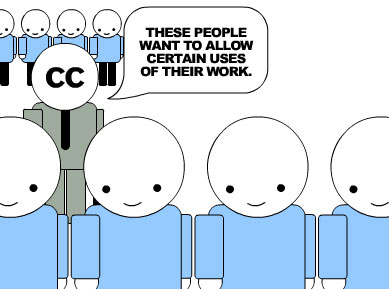
Creative commons licences are one answer to the redundant laws that currently govern copyright and user/ producer (produser) relations. Of course these style of licences would mean putting a lot of big businesses and corporations out of business (who needs a record label?), which is why they are not yet the established norm, but I think they are the way of the future.

So as a musician myself, I have come to the conclusion that I support the free sharing of music so long as it is for non-commercial means. P2p file sharing allows the entire world of music to be easily accessible any time and any place. It allows music to transcend cultural, time, language, religious, geographical and generational boundaries, which is an amazing and important thing.
Music is the lifeblood of culture and it needs to be shared. In saying this, I do believe that it is incredibly important to support creative artists and give them the payment and respect they deserve. I think it is fair that if you plan to make money off someone else’s music, someone else’s hard work, then you pay them royalties. But to simply share the love, appreciation and knowledge of music, that should be free.
Music is the lifeblood of culture and it needs to be shared. In saying this, I do believe that it is incredibly important to support creative artists and give them the payment and respect they deserve. I think it is fair that if you plan to make money off someone else’s music, someone else’s hard work, then you pay them royalties. But to simply share the love, appreciation and knowledge of music, that should be free.
SOURCES
Fox, M. ‘Technological and social drivers of change in the online music industry’ in Special Edition; music and the Internet, First Monday Online Journal, originally published Feb 2002, republished July 2005.
Bowrey, K. & Rimmer, M. ‘Rip, mix, burn: the politics of peer to peer and copyright law’, in Special Edition; music and the Internet, First Monday Online Journal, originally published 2002, republished July 2005.
Moore, C. ‘Creative choices: changes to Australian copyright law and the future of the public domain’, Media International Australia, Incorporating Culture and Policy, 2005, no. 114, pp71-82.


The Arctic Monkeys got noticed through P2P. They had around 50 people help seed their EP onto the internet and it was downloaded all around the world, picking up more and more people as the word spread and then they landed a record contract from that and toured all over Earth... Amazingggg... I agree with you though Alex, it's a problem if the artist is not getting any dividends for their time and effort, but music should be just loved and spread for what it is and I guess if they're good enough people will recognise that and they will go to their shows.. :) Kinetic Form (Mass Effect)
ReplyDeleteMusical and vocal artists should be paid for their talents just as actors, designers and artists are paid. Free downloading should be impossible. Recording companies should invest in IT systems to facilitate pay-for-music systems. Musicians should form cooperatives to enable remuneration through pay-for-music systems. Fans should access pay-for-music systems just like they access their mobiles, via pre-paid or plan (for music downloading). Bla Bla Bla
ReplyDeleteRaised some good points Hardy but I don't think a situation such as this will ever get resolved. One, because money is involved and everyone wants their share and two, the internet is an amazing growing thing, people are always going to be able to find a way to share what they love no matter how much others try to stop them.
ReplyDeleteAs an artist, the more people who listen to my music the better. Sure it's good to get paid for it but at the end of the day, that's not really what it's all about. Songs being illegally downloaded is a good way for your music to spread and reach new ears, then hopefully some of the people who hear it will come to your live shows or buy your full album. But if not, hey at least your art can be appreciated by a wider audience.
ReplyDeleteThis is a very old argument, and most people involved in it have already made up their minds as to what is right for them, and it's hard to change that. But it's interesting to consider ownership of material, and this article is pretty good. Cory Doctorow writes for Boing Boing and is heavily ingrained in the copyright/DRM debate, and has written heaps on the subject - I'd definitely recommend some of his articles.
ReplyDeleteThe way we experience, consume and interact with music has changed. Record company moguls can't expect to not change their decades-old operation and not lose money. And honestly I couldn't care less about some CEO of Sony getting more money, I care about the bands.
When it's a big band I'm not too fussed (U2 don't need the 50c from me buying an album), but I always try to buy as much local music as I can. Similarly, a lot of the bands I'm into now don't have their cds in shops round here, because they're fairly obscure (I'm so cool). And I don't like buying digital music, I want to have something for my money. Record companies don't have to spend money producing digital downloads - the same way publishing companies don't need to spend money on ebooks. So why should the price be the same? It's just jerks wanting to get money.
Basically the way it works now is a band has to be willing to give their product away for free. This will generate hype and get punters to their shows and lead to sales via itunes and other legitimate download sites. Hell they might even sell an actual record.
ReplyDeleteOn an interesting note, the digital revolution has not stopped vinyl sales becoming the medium most increasing its market share. Its evolution, baby... And the music world will evolve with the ways people consume music. It will still generate revenue commercially just in different areas.
If an artist only receives 15% of revenue from the fruits of their labour, surely it would be more beneficial for them to spread their music and make it widely accessible for the masses at no cost to the consumer. These days noterioty and recognizability are the most valuable assets an artist can have, provided the artist is worth their salt, they will have countless ways of bringing home the bacon in the long run. This is why so many artists post their music on blogs to be downloaded for free. The landscape of music consumption has changed, all artists signed and unsigned are now on a level playing field and if major labels don't get their slice will anyone really lose any sleep?? Accessibility of music will never be a bad thing for the artist or the consumer.
ReplyDeleteLiked you linking of ideas, since from the lover of music that in some stage and very likely nowadays may download music illegaly from the internet from its favourite bands. Passing through companies that hold the copyrights and make massive profitability from intelectual work from artists which work hard and take the smallest share of profit margins and lot of times can't even just live from music as an income as it wouldn't be enought.
ReplyDeleteIllegal downloading is not something that began last year and probably will never end, although it should definetely be taken more seriously by goverments on implementing technological laws and barries to reduce it somehow as downloading music is basically a crime such as stealing an old lady`s purse on the street, as the victim usually doesn`t have any way to react or protect itself, and regarding this case the artists are the victims. As you said the lastest law in Australia put in practise regarding it is dated of 2006 and is not wide or severe enought that would stop or change people's mentality of opting for what is easier and confortable to their pockets without considering the artists work and giving something in return for those that provide such a pleasure with their music.
I've already bought songs from Itunes and have several original cds from my favourite bands. Don`t want to be moral saying such a thing, as if I had to pay AUD$ 1.00 right now for all songs that in some misterious way got into my computer, I would have exactly AUD$ 14,712.00 less in my acc. but maybe if it was harder to download from internet and CDs were blocked for copying or I could get behind bars with a nice big fellow with a heart tatto on his arm as a room mate, I would definetely be saving much more money to build up my cd collection and to listen to my favourite artists.
Congrats for the blog! Cheers, Felipe